AlphaMol
made breakthroughs in understanding of a brain cancer related target.
By resolving the 3D structure of this important target Panx2 coupled
with computational simulations, the molecular mechanisms were
illuminated which could guide Panx2-based drug discovery for brain
cancer.
ATP membrane pore channel protein
plays an important physiological role in human physiological
processes, including immune regulation, energy generation, and
cancer.
Pannexins protein family, which includes
Panx1, Panx2, and Panx3, can form macroporous non-selective TM
channels. They play an important role in cell communication and
homeostasis. Panx2 protein is the largest Pannexins family member. It
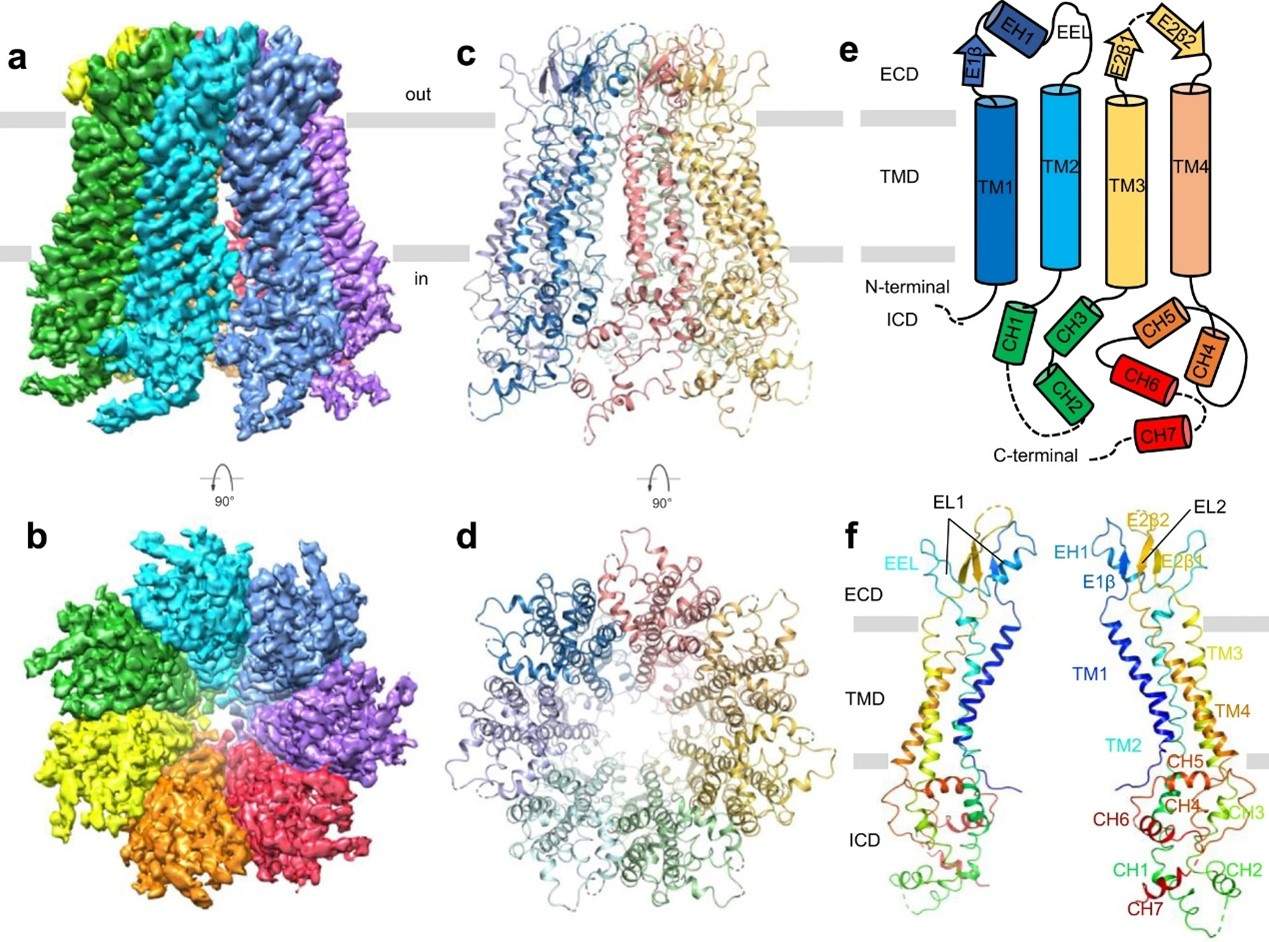
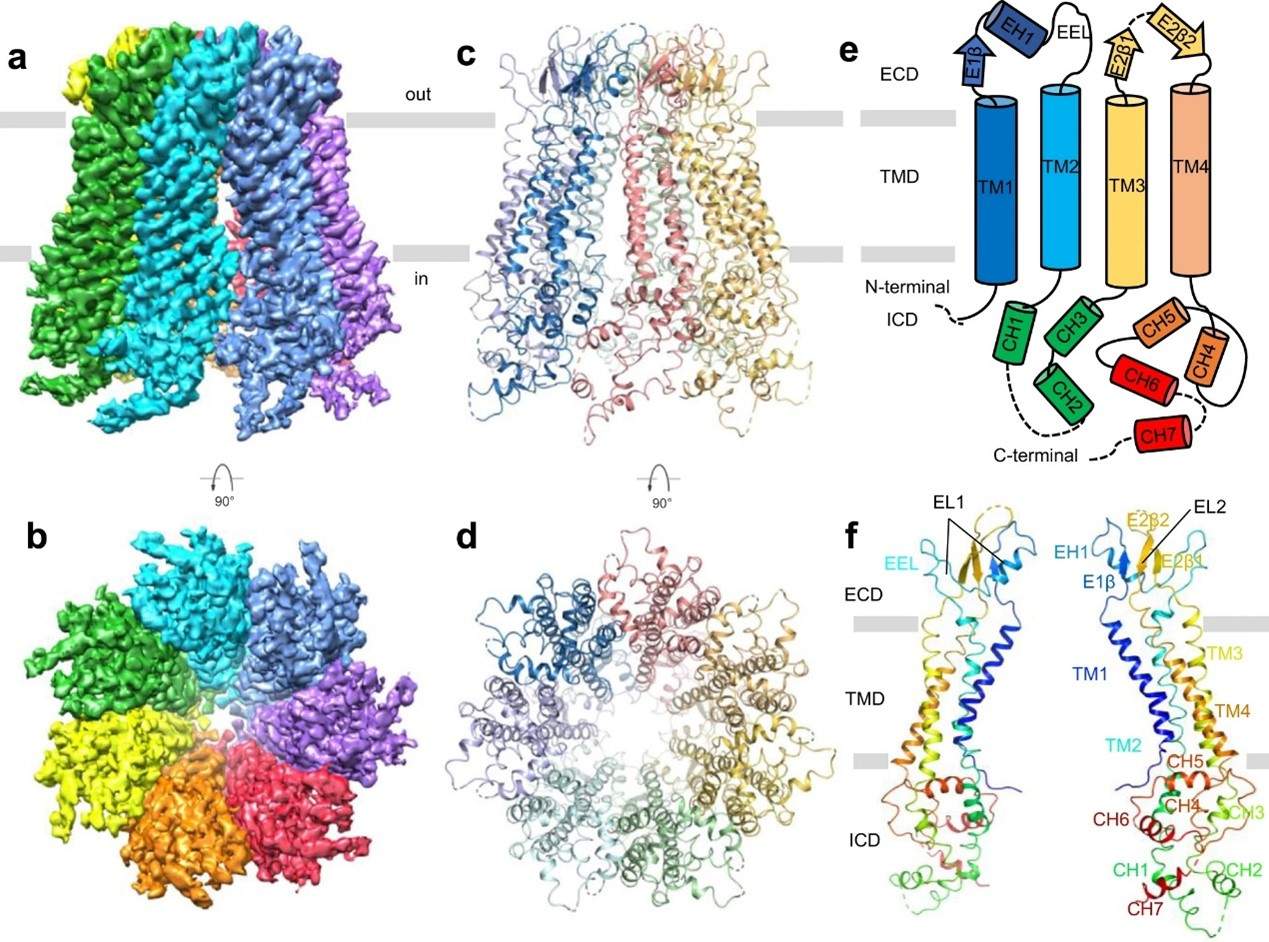
is mainly expressed in the central nervous system . Our team solved
the high-resolution structure of the Panx2 membrane protein through
the freezing electron microscope. It found that Panx2 is a four-TM
domain protein with seven monomer proteins gathered together, forming
a transmembrane pore. By comparing the structures of Panx2 and Panx1,
the team speculated that Panx2 is the channel of ATP.
The
abnormal function of ATP membrane pore channel transmembrane (TM)
protein leads to severe consequences such as ischemic cerebral
infarction, glioma, and pleomorphic malignant glioma.The total
survival time of patients with a higher level of Panx2 is longer,
which suggests that Panx2 may have an anti-tumor effect in the early
stage of glioma.
This work illuminated the 3D structures
of Panx2 transmembrane protein at the atomic level. It helps to
understand the fundamentally biological functions of Panx2 which
provides an insightful view into brain cancer drug
discovery.
Reference
Cryo-EM structure of
human heptameric pannexin 2 channel. Nature
Communications volume 14, Article number: 1118
(2023) doi:10.1038/s41467-023-36861-x